Where Does the Value Actually Live? The Humanist Opportunity in Sports Economics
Where Does the Value Actually Live? The Humanist Opportunity in Sports Economics
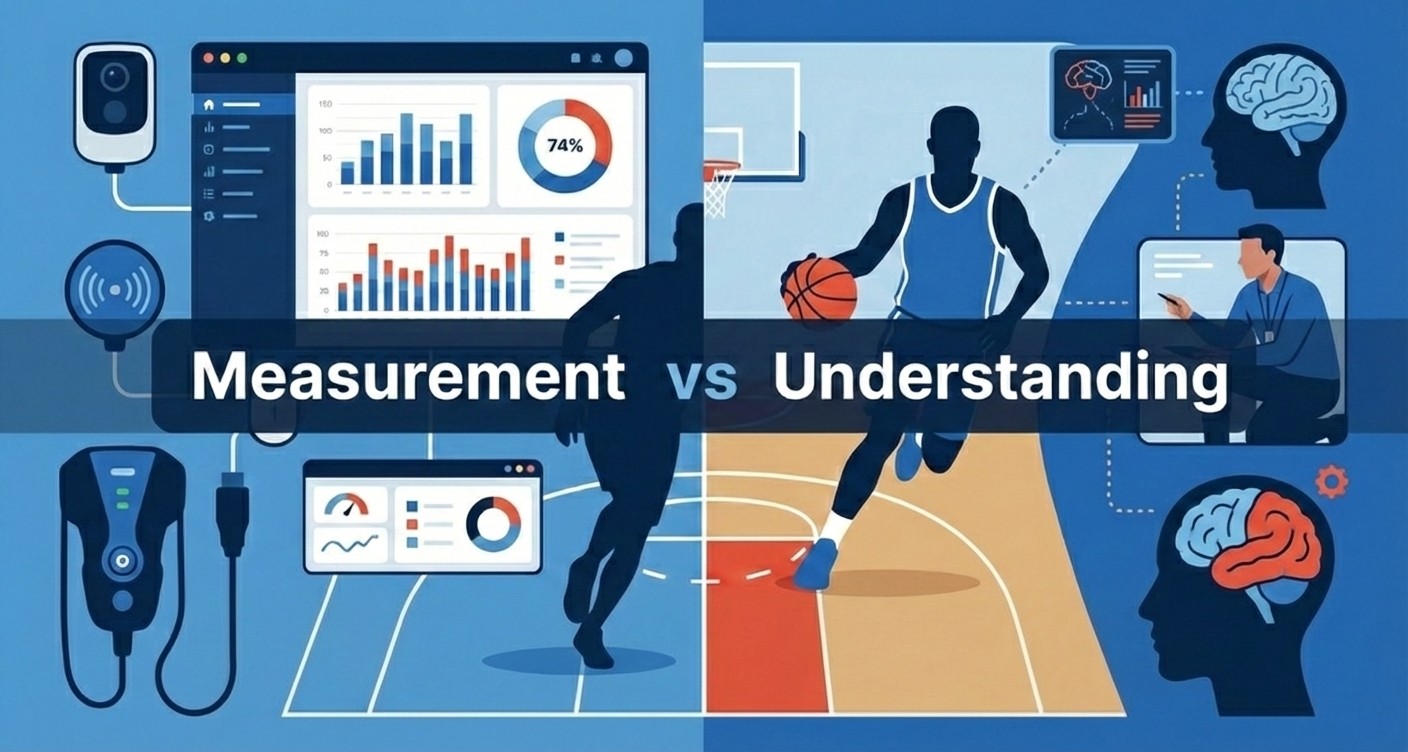
In Part 1, I wrote about how measurement does not automatically lead to understanding, and how the future of performance depends on connecting human insight, data systems, and strategy.
There is a deeper opportunity underneath that idea.
Where does the value in sports actually live?
This is not just a question about analytics. It is a question about how value moves through the system, and how well that system reflects the human performance that creates it.
The Value Chain That Matters
Here is the chain that matters:
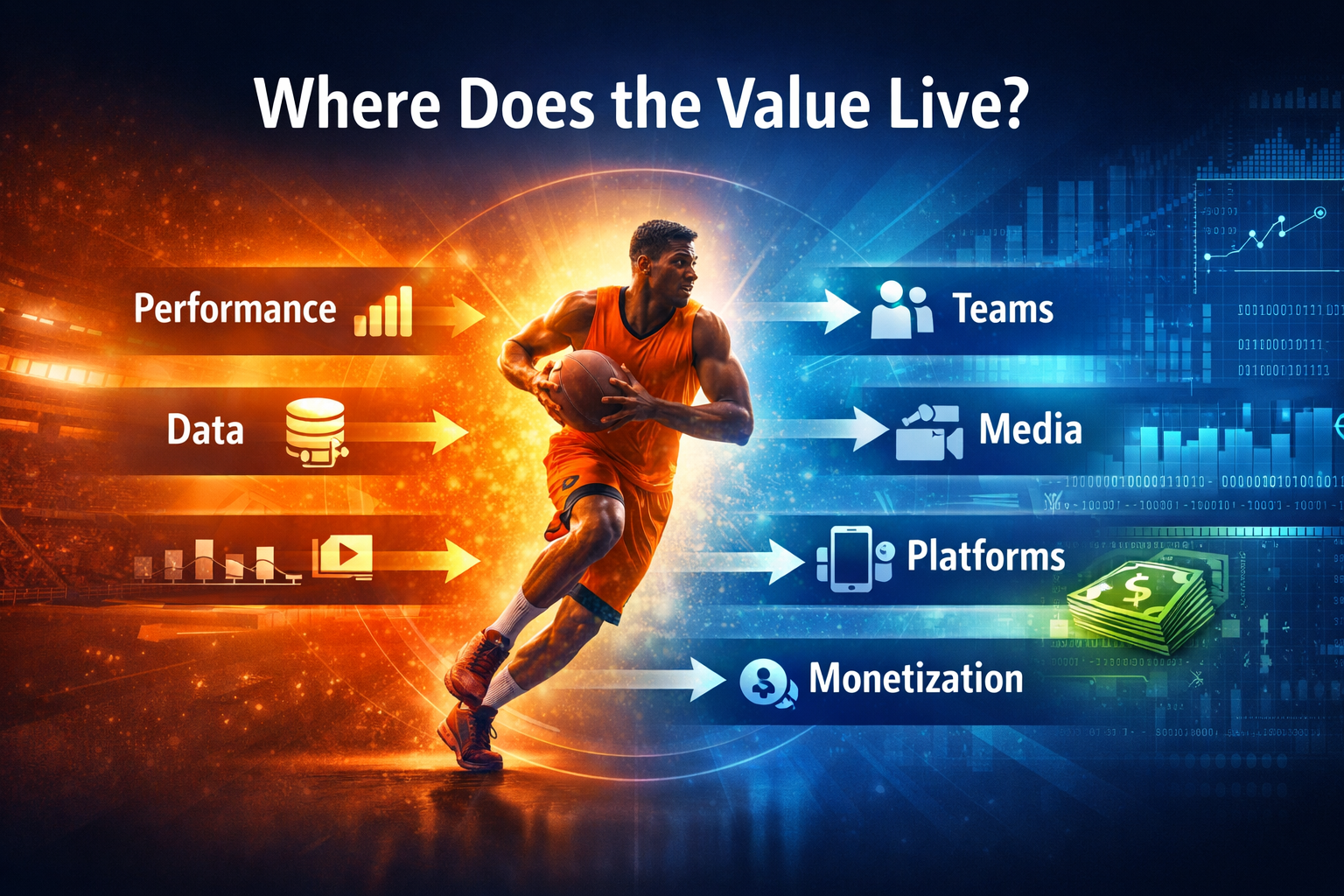
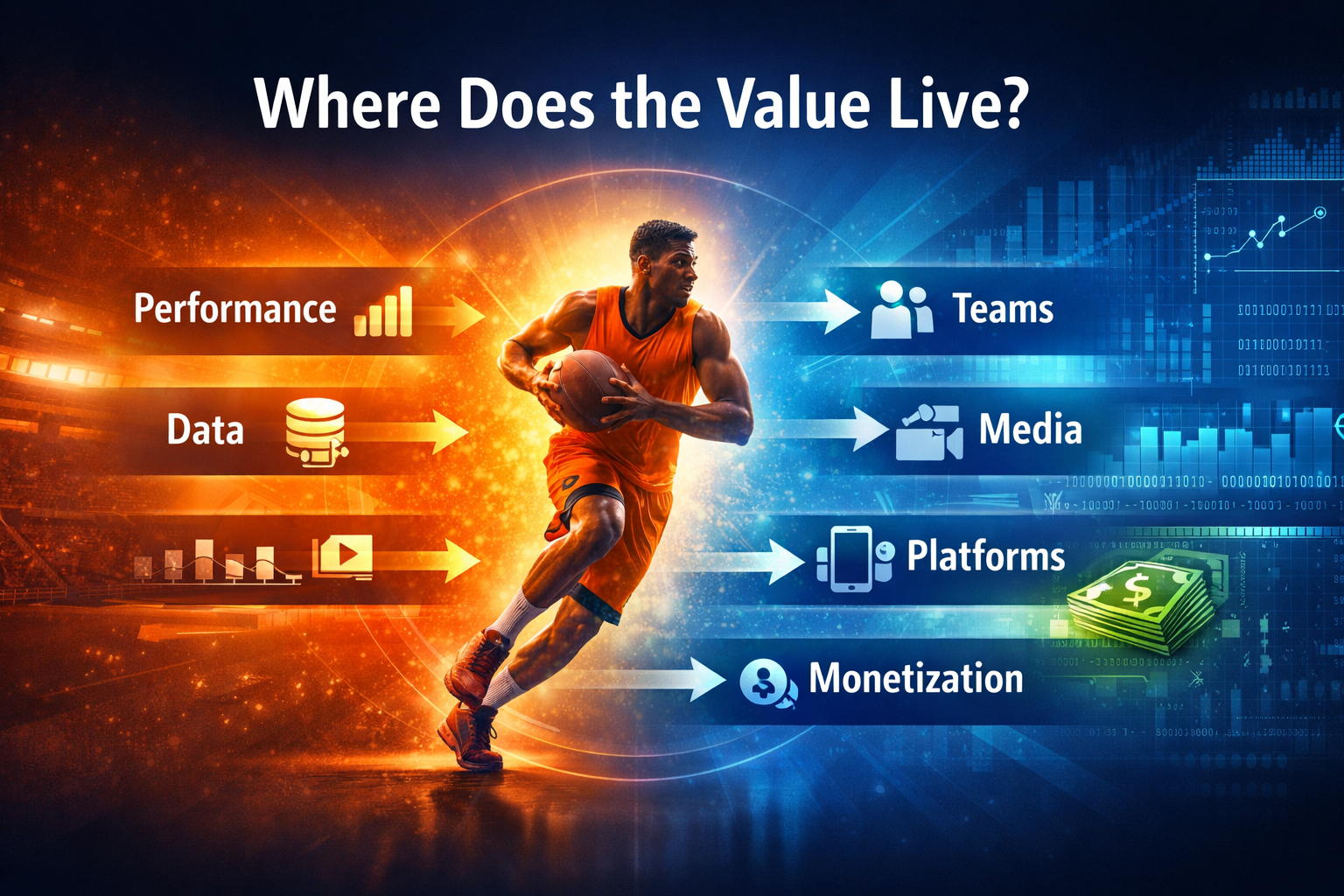
Athletes generate the performance. That performance creates the data. Teams use the data to gain advantage. Media packages it. Platforms distribute it and monetize it.
This chain works.
It works exceptionally well from a technology, scale, and distribution perspective. Sports data moves faster, reaches further, and generates more engagement than ever before.
The opportunity is making sure it works just as well from a human perspective.
Because the real value still starts with the athlete. Their performance. Their decisions under pressure. Their ability to execute in real time.
Technology measures that beautifully. What it does not always do as well is preserve context, ownership, and alignment as value moves through the system.
That gap is where the humanist perspective becomes essential.
How Sports Differ From Other Performance Industries
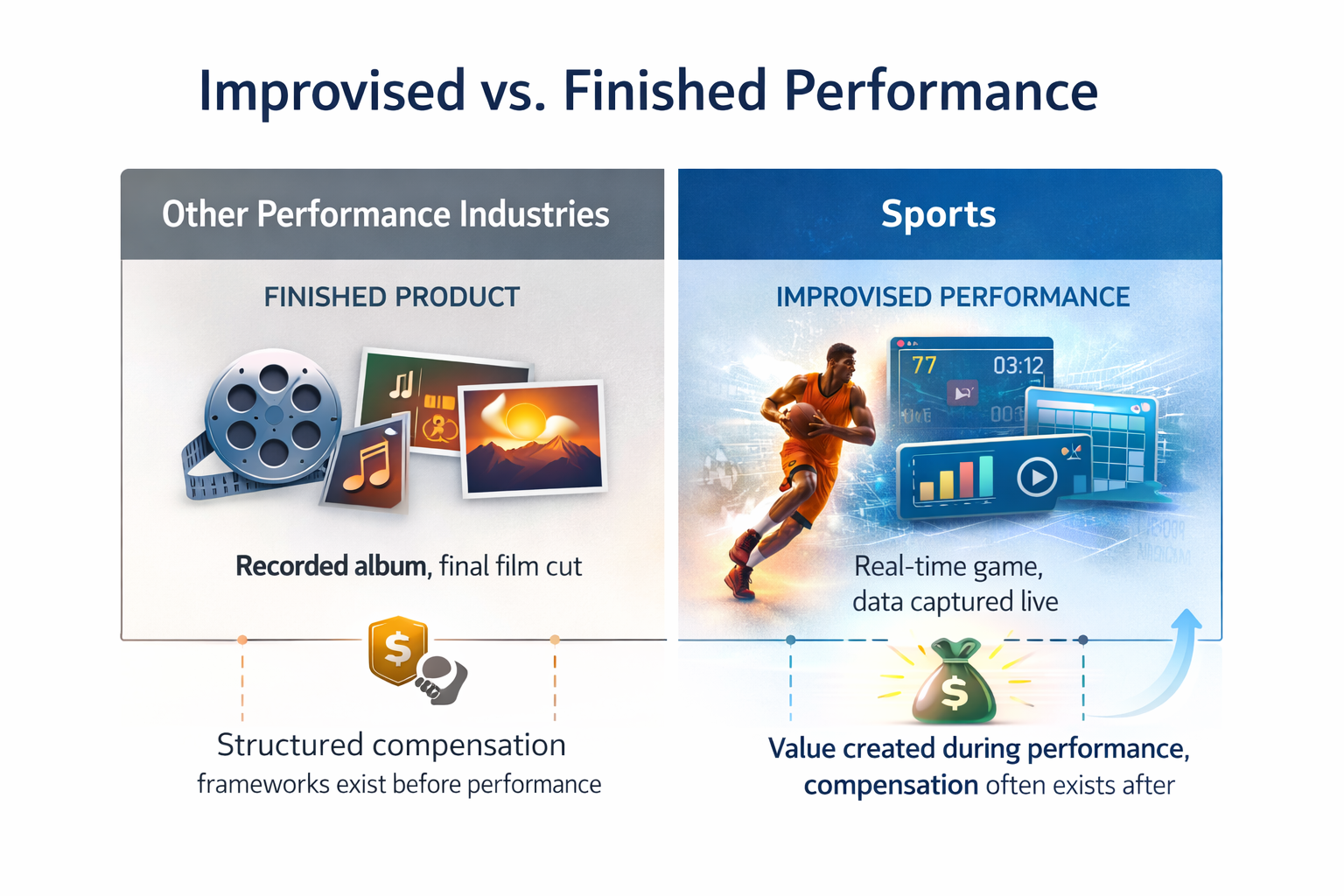
In most performance industries, value is structured before the performance.
Child actors are paid through studio budgets. Musicians are paid through labels, advances, ticket sales, and royalties. Compensation frameworks exist before the curtain goes up.
The performance is treated as a finished product, and value is allocated accordingly.
Sports operate differently.
Athletes create value during the performance. Real-time data is captured, visualized, discussed, and shared as it happens. The performance itself is the product, unfolding live, often without a predefined structure for how that value flows back to the athlete.
It is not a finished product. It is closer to live improvised theater or a freestyle session than a recorded album or a final cut of a film.
That distinction matters.
Improvised, real-time performance produces immediate media value. Stats, clips, debates, and narratives are created instantly. This is a feature of sports, not a flaw. But it requires systems that understand how value is being created in the moment, not just after the fact.

Here is where the difference becomes most visible.
Performance value in sports is dictated week to week, game by game. There is a 24 hour window after each game where value is created, regardless of whether the overall performance was good or bad. I have watched athletes have a terrible game overall, but a couple of good clips get clipped up, go viral, and generate hundreds of thousands of views across multiple platforms. The athlete gets exposure, engagement, and people giving them love in the comments. But there is no monetary value flowing back to them from the platforms that monetize that content.
Think about a viral dunk clip. It plays on everyone’s feed. Different creators make top 10 lists featuring it. Others show it from different angles. It gets reposted, remixed, and replayed. The clip generates millions of views across platforms. The athlete who created that moment might see a few thousand dollars in NIL deals if they are lucky, but the platforms and creators monetizing that content see far more.
Now consider the comparison. A child actor with a speaking role in a television show or film enters a system where residuals are built in. That performance reruns, and they get paid. A musician with a viral hit sees streaming royalties, licensing deals, and performance rights payments that continue for years. The numbers are stark. Thousands of youth athletes and athletes outside of high level Division I generate viral content, millions of views, and significant engagement, yet receive minimal to no compensation from the platforms that monetize their performance. Meanwhile, a child actor with a recurring role or a musician with a viral song sees structured compensation that reflects the ongoing value of their work.
Consider this specific example: A child Netflix star, age 12 to 20, can earn $20,000,000 or more through a guaranteed pay model. The infrastructure is provided by the industry. Payment is guaranteed. Legal protections and representation are built in from day one.
Now consider a basketball child prodigy, age 11 to 21, who generates 200,000,000 plus views. They might earn $1,000,000 if they are extremely successful, but they operate under a self employed model. They had to build their own infrastructure. They had to hustle for merchandise, brand deals, and social media monetization. Most critically, they receive no pay when others monetize their content. For most, it never takes off.
Both created similar value. One had infrastructure.
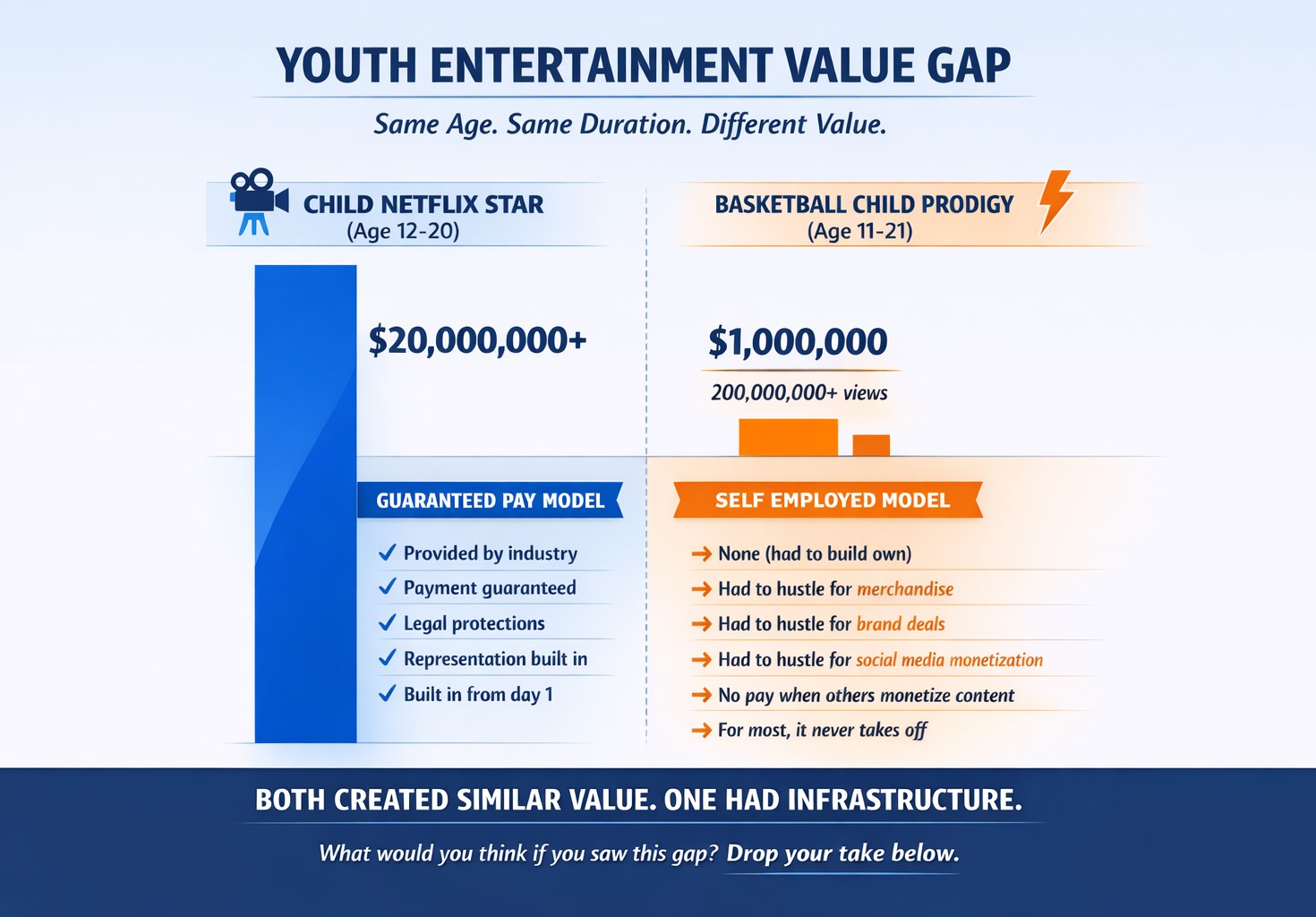
This is not a small problem. This is a systemic gap that affects the majority of athletes who create value but lack the structural support to capture it. The opportunity is not just about building better systems. It is about recognizing that the value being created deserves pathways to flow back to the source.
The Humanist Opportunity
This is where the humanist perspective comes in.
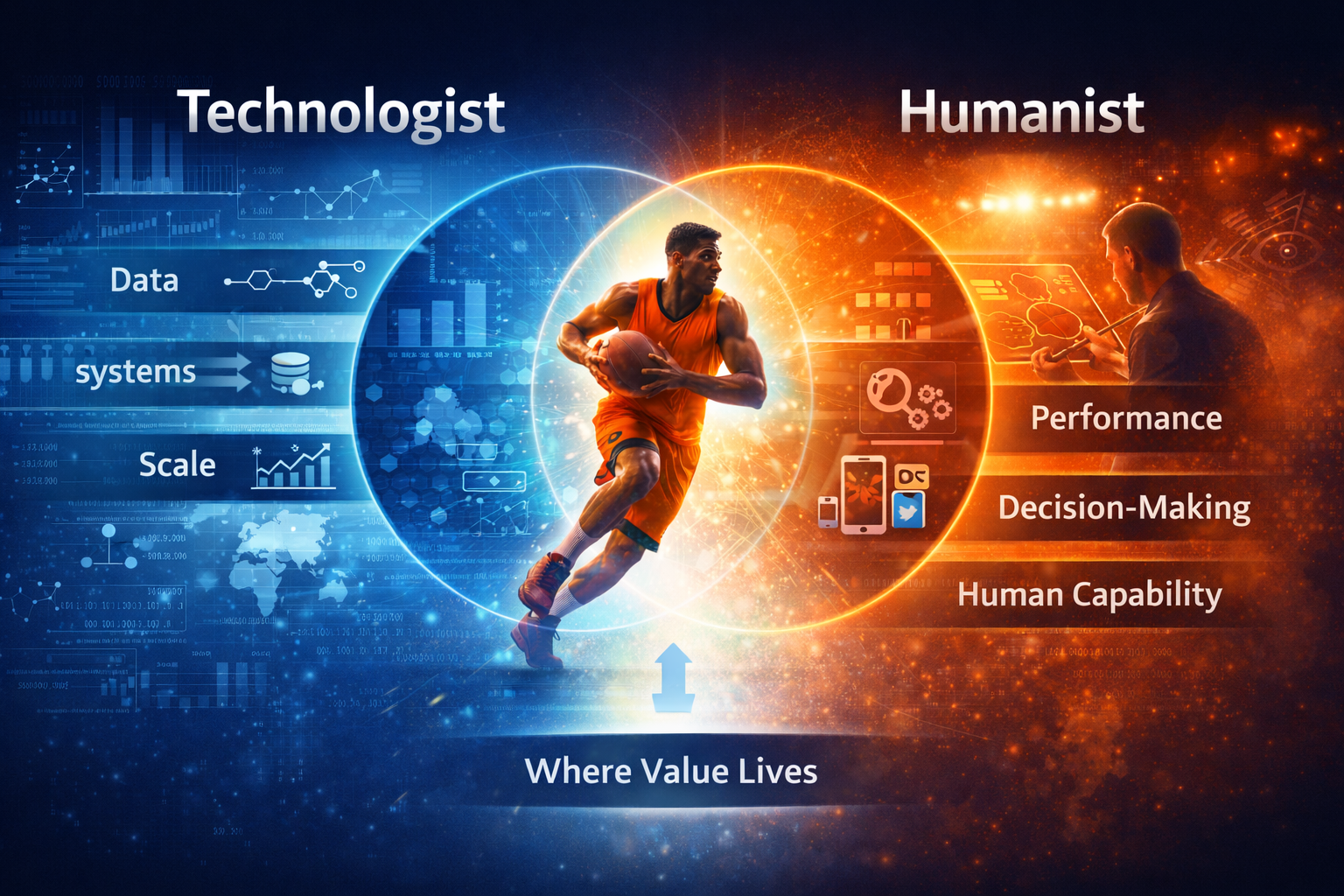
The technologist sees data, systems, and scale. The humanist sees performance, decision making, and human capability.
Both perspectives are necessary. The opportunity is aligning them.
The real value lives inside the athlete:
- Their performance under pressure
- Their decision making in real time
- Their ability to adapt, respond, and execute
These are human capabilities. Technology can measure them. It can visualize them. It can distribute them. But it does not create them.
When systems focus only on measurement and distribution, they risk missing where value actually originates. The goal is not to reduce technology’s role, but to design systems that better reflect the human source of the value they amplify.
This is not about fault. It is about design.
Who This Opportunity Affects
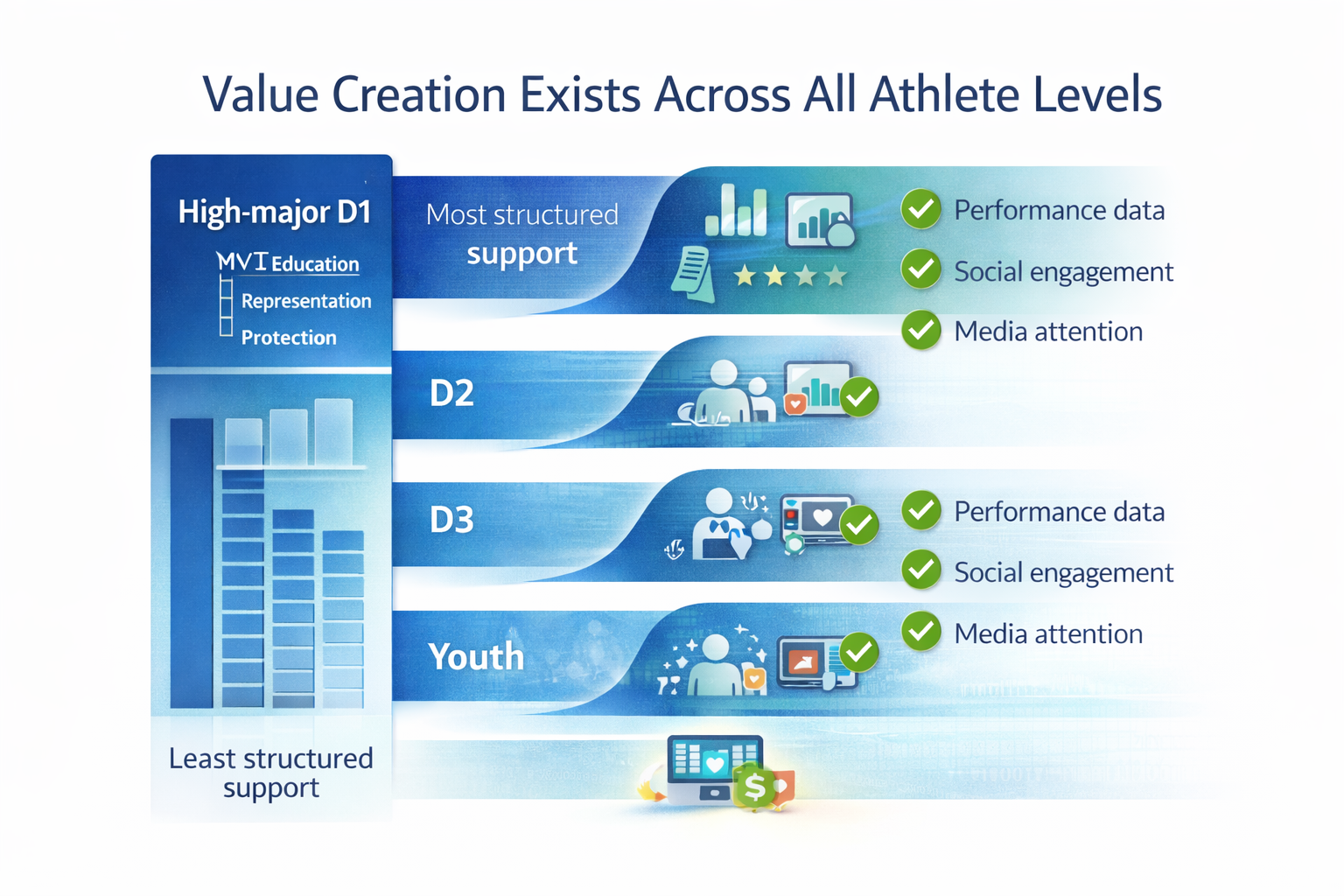
This opportunity exists across all levels of sport.
High-major Division I athletes are currently the most structurally supported. Media rights, NIL education, and representation are built into their environment.
But the same value creation dynamics exist elsewhere.
Lower Division I, Mid-major Division I, Division II, and Division III athletes generate performance data, social engagement, and media attention. Youth athletes often generate enormous interest early, through highlights, rankings, and online visibility.
What differs is not the creation of value, but the structure around it.
In other industries, early performance comes with built-in frameworks for protection, education, and compensation. Sports are still catching up in this area.
That gap represents opportunity, not failure.
It is an opportunity to design systems that help athletes understand the value they are creating, earlier and more clearly, and to align incentives across the ecosystem.
When Performance Data Becomes Media
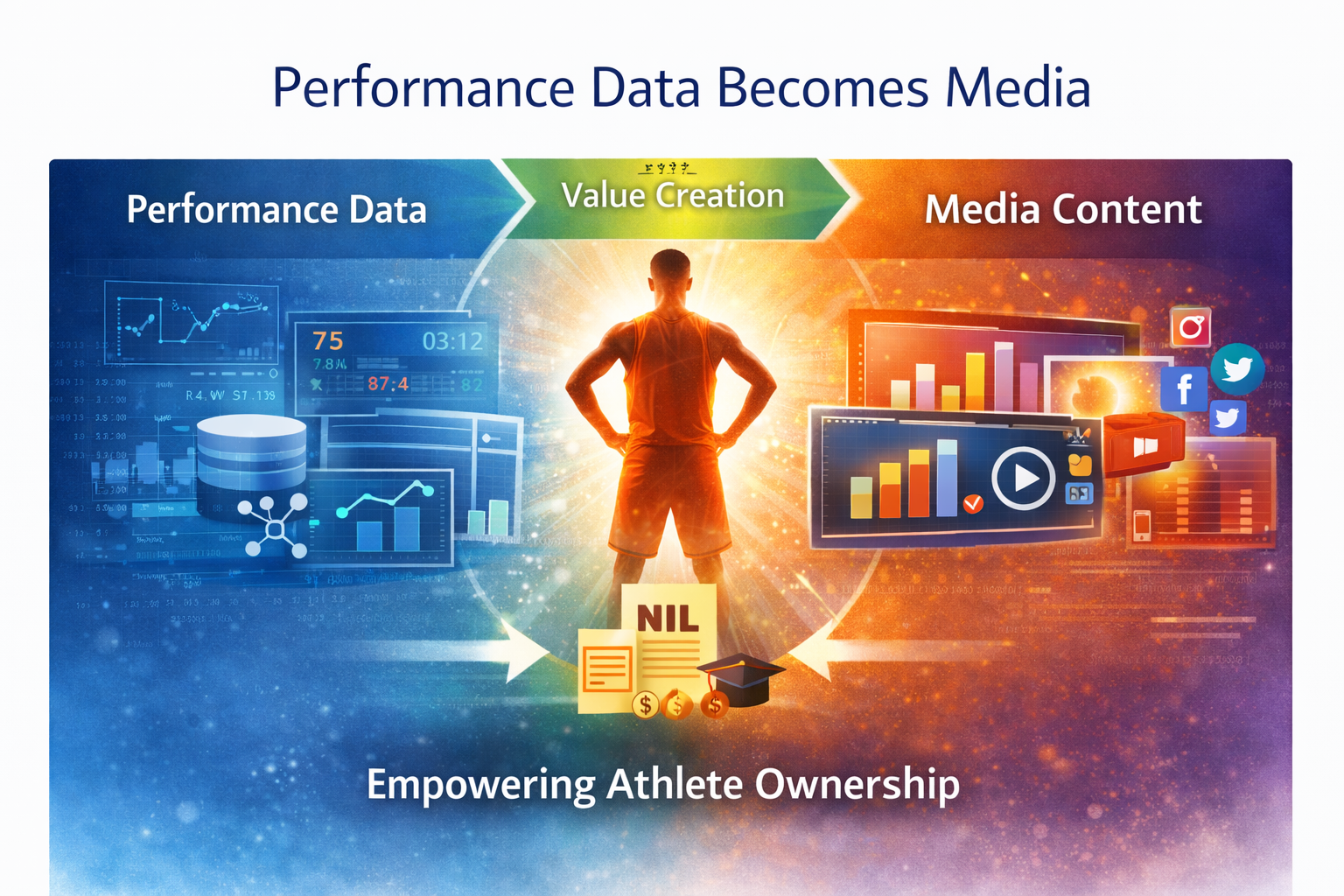
As performance data becomes media, clarity matters.
Stats, clips, and narratives drive engagement. They help fans understand the game. They fuel conversation. They create new forms of entertainment.
The opportunity is making sure athletes are not just participants in that process, but informed stakeholders.
NIL is part of this evolution.
It is not just about endorsements. It is about identity, performance data, and participation in the value created when human performance becomes media.
With the right education and infrastructure, data does not just measure athletes. It empowers them.
What Needs to Evolve
The future is not about choosing between humanists and technologists.
It is about building systems that do three things well:
- Measure value where it is created, in real-time performance
- Preserve context and ownership as value moves through the system
- Align incentives so athletes can participate in the value they generate
This requires infrastructure, education, and design thinking that starts with the athlete and scales outward.
That is the opportunity.
At BTE Analytics, we’re building this infrastructure. We measure performance data as it’s created. We preserve context and ownership through athlete-first design. We align incentives through transparent revenue sharing and education.
The goal: athletes understand the value they create, own their data, and participate in the value they generate.
Because the real value lives in the athlete. The systems should reflect that.
Closing
In Part 1, I wrote that measurement does not mean understanding.
Part 2 is about recognizing that understanding also requires alignment.
The value in sports lives in human performance. Technology amplifies it. Media distributes it. Platforms scale it.
The next phase of sports analytics is about making sure those systems reflect where value actually starts.
Not just better measurement. But better alignment between performance, data, and people.
Part 3 will explore how this same human-centered framework extends beyond sports.