
I Have Called Myself a Translator for Years. Sports Has a Translation Gap.
I Have Called Myself a Translator for Years
Playing overseas, my coach sat me down with Steve Nash film and showed how Nash used the referee lanes to create angles on the court. That was the moment I saw basketball as math in motion: lanes, spacing, geometry, decisions.
From then on, I have used sport to build curriculum, analytics tools, and games.
I have called myself a translator for years.
Not because I speak for data scientists or speak down to athletes. I use the word because much of my career has taken place between different basketball worlds.
I have been the player receiving information. I have trained young athletes trying to understand their development. I have worked with NBA teams on player-tendency and analytics questions. I have helped people around the game, including families of NBA players, understand what analytics mean and how they connect to development.
At the end of the day, analytics are tendencies. The numbers are accumulated evidence that help us see those patterns more clearly.
The tools have changed. The job has remained the same.
Turn complexity into understanding. Then turn understanding into action.
I wrote about this role in 2020, when I called Sportstechwest an analytics translator. The title was not a marketing line waiting for a trend. It described the gap I kept seeing between measurement and meaning.
The need has been there longer than the language.
The Real Problem Is Not More Data
Organizations now have more dashboards, automated clips, sensor outputs, and ways to grade a possession than most staffs can absorb in a week.
College programs also operate inside regulated time. Under NCAA Division I Bylaw 17.1.7.1, student-athletes may spend no more than four hours per day and twenty hours per week on countable athletically related activities during the playing season. Required film sessions and technology walkthroughs can fall within that limit when they are directed or supervised by coaching staff.
That constraint matters. Every minute spent explaining a dashboard competes with practice, recovery, and the rest of a student-athlete’s life.
More information does not automatically produce more understanding.
Sometimes it creates longer meetings, conflicting interpretations, athlete confusion, and reports that never become a clear next action.
The missing piece is often training. People need reps that teach them how to recognize a tendency and act on it.
Sports does not have a data shortage. It has a translation gap.
What a Translator Actually Does
A translator does not make analytics less intelligent.
A translator protects what is true while making it usable for a specific audience.
An analyst may see a statistically meaningful pattern. A coach may see a tactical problem. A player may hear criticism.
The job is to decide which tendency matters, show it clearly, and communicate it in basketball language.
I call that skillset Hoop Tendency Expertise. Hoop Tendency Experts see patterns early and turn them into cues athletes can use.
BallCODE is the product. The skill is separate.

Coaches need tactical and developmental meaning. Players need clear cues and behaviors they can test. Analysts need confidence that the finding still holds after it has been translated.
That is not watering down analytics.
It is completing the work.
I Did Not Learn This From One Title
I did not learn this from one title.
I learned it from different sides of the game:
- Playing professionally and receiving information during live competition.
- Training young athletes and connecting measurements to development.
- Testing products, building models, and working through analytics questions with teams.
Through BTE Analytics, that work moved into early innovation pilots with NBA teams.
People around the game still ask me to put analytics into human language. Professors now ask what I am seeing in sports technology.
Each setting looks different. The skill is the same.
What BallCODE Is
BallCODE is how I turned that translation work into a learning system.
It starts with basketball: stories, decisions, and if/then choices. That familiar language becomes a bridge into analytics, logic, coding, and decision-making.
Coding, in this context, means thinking like a computer. Break a task into clear steps, understand the conditions, and decide what happens next.

We usually introduce BallCODE to younger learners. The same thinking matters for coaches and athletes at every level.
A Practical Coaching Principle
Working memory is limited. Poorly organized instruction creates unnecessary load.
Film works best when the coach defines its purpose and directs attention toward what matters.
HoopStudy’s breakdown of paint touches is a clear example: Get EASIER BASKETS with analytics. It moves from a statistic to film, then from film to decisions a player can execute: finish, drop to a big, hit a cutter, or kick out for an open three.
That is translation. The work is incomplete until the player understands the next action.
I use a flexible coaching loop:
- A focused observation.
- A small number of relevant clips.
- One clear cue.
- One behavior to test.
- A follow-up measurement.
The number of clips will vary. The principle does not.
Less footage. Clearer direction. Focused film and one actionable instruction beat a highlight dump that leaves everyone nodding and nobody changing.
Why This Skill Matters
Assistant coaches do not all need to become programmers or data scientists.
They need enough analytical literacy to ask better questions, challenge weak conclusions, and communicate an insight in basketball language.
Math still matters for advanced models and for checking the work. Analysts protect the measurement. People who see the pattern and explain the cue help the organization use it.
Not instead of analysts.
Alongside them.
That combination gives the staff confidence in the number and clarity in the cue.
That is the job.
BallCODEChess and the Reps That Make It Stick
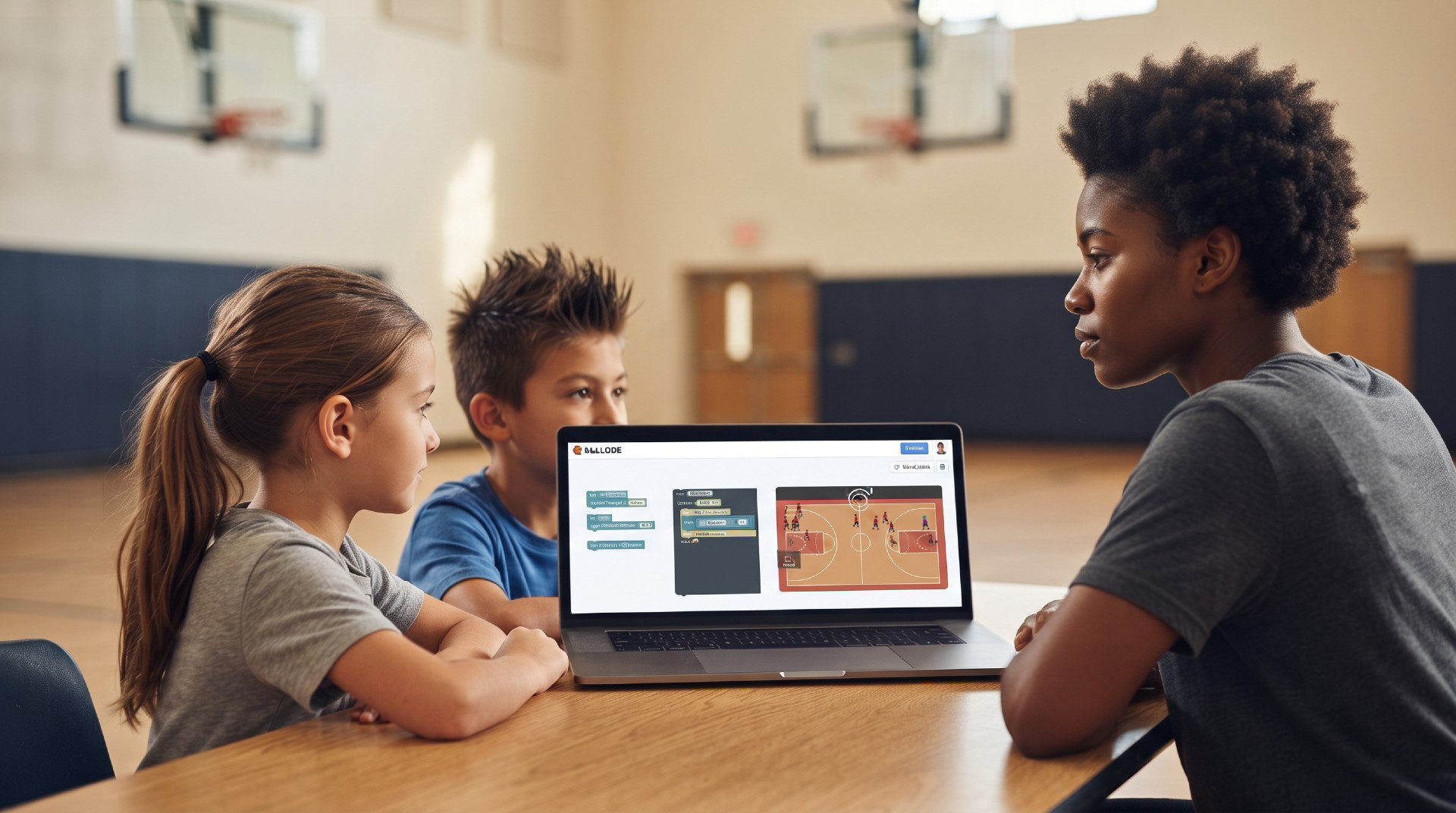
BallCODEChess is the competitive layer of BallCODE.
We use robots and controlled objects to make a situation easier to define, repeat, and code. That structure helps learners see the pattern before applying it to a fluid human game.
BallCODEChess teaser. Robots and scenarios as controllable objects for pattern recognition.
BallCODEChess tests knowledge mentally in the same way lifting, running, and playing test the body.
Reps. Decisions. Pattern recognition under pressure.
If you lead player development, try one scenario more than once. See whether repeating the same context sharpens the decisions.
Same bridge. Different rooms.
The Gap I Keep Working to Close
Technology will keep giving sports more footage, measurements, and ways to evaluate performance.
Information alone does not teach.
Someone still has to decide what matters and turn it into a cue an athlete can use.
That has been my work for years.
I translate the game.
Related: SportsTechWest the Analytics Translator (2020)
-
Rashad West Sportstechwest